
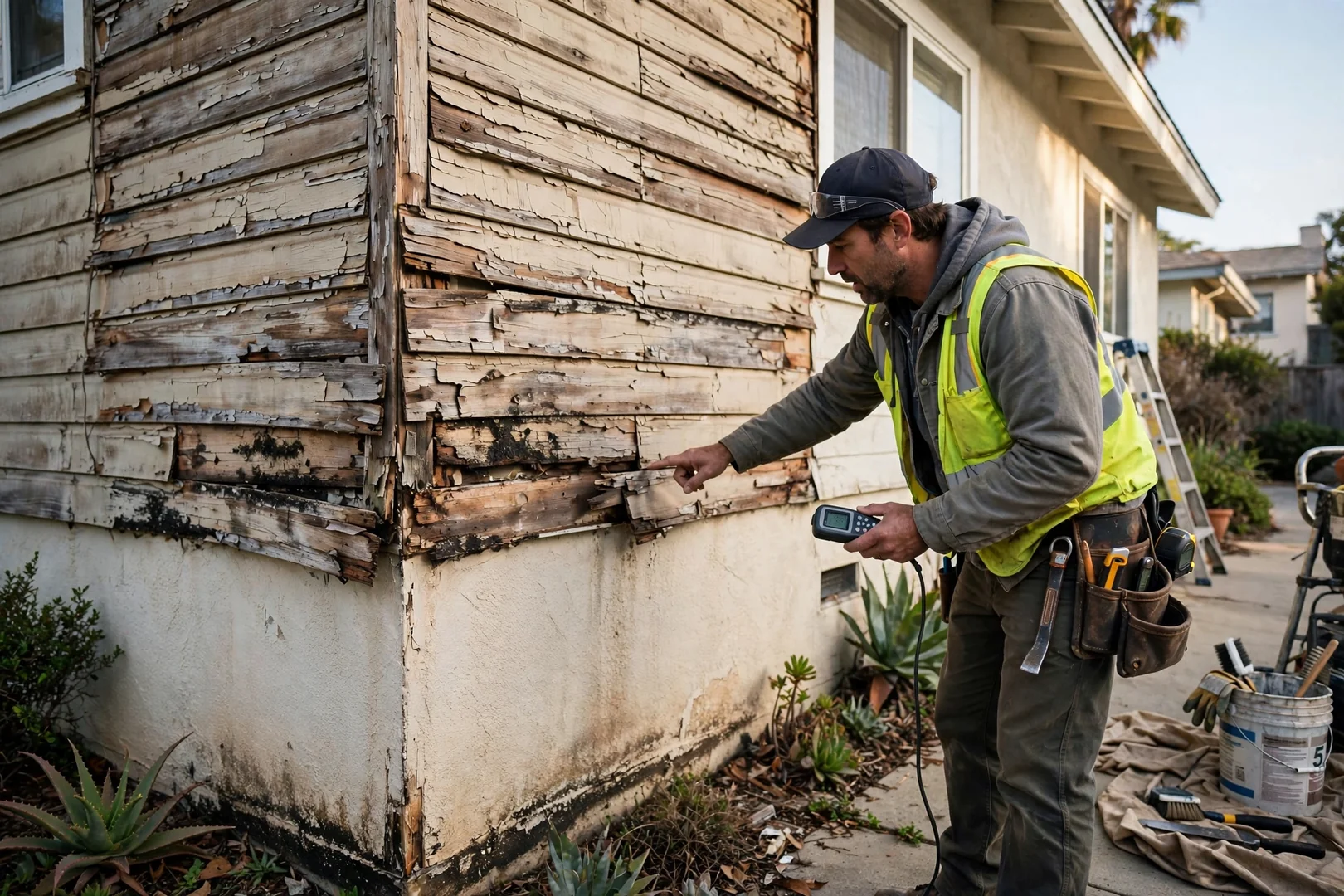
Every project opens with a full wall-by-wall evaluation of the existing cladding, trim, flashing, and penetrations. We probe suspect areas, take moisture readings at sill plates and window corners, and document sheathing condition behind failing boards. Photos and notes go into a written scope. Salt-laden air in Newport Beach accelerates hidden deterioration, so this inspection determines how much substrate restoration the home actually needs.
James Hardie & Fiber Cement Siding in Newport Beach, CA
James Hardie and fiber cement siding installation replaces failing wood, stucco, or composite cladding with dimensionally stable panels and planks engineered for coastal exposure. Newport Beach homeowners dealing with salt-air corrosion, swollen trim boards, and paint failure on ocean-facing elevations benefit most from this restoration path. Our crews remove compromised cladding down to the sheathing, correct any substrate rot, install a properly lapped weather-resistive barrier, then set ColorPlus or primed planks with blind-nail fastening and manufacturer-specified clearance at grade and roof lines. Butt joints are flashed, not caulked alone. Elite Newport Beach Siding Contractors handles evaluation, moisture testing, and installation sequencing, with 2026 project scheduling now open across Balboa Peninsula, Corona del Mar, and Newport Coast neighborhoods.
Call Us On: (949) 649-3389Fiber Cement Siding Overview
What Our James Hardie & Fiber Cement Siding Service Includes
James Hardie and fiber cement siding work is the process of removing deteriorated exterior cladding and installing cement-based plank, panel, or shingle products over a corrected, properly flashed wall assembly, and at Elite Newport Beach Siding Contractors it covers inspection, tear-off, substrate repair, and finish installation across Newport Beach properties. Evaluation begins with moisture readings, fastener pull tests, and sheathing probes at problem elevations. Damaged OSB, rotted studs, and failed housewrap are rebuilt before a single plank goes up. Crews then install HardiePlank or HardiePanel with shear-rated fasteners, kick-out flashing at roof-wall intersections, and correct 6-inch grade clearance. Single-family homes, coastal condominiums, multi-unit buildings, and small commercial exteriors all receive the same staged process. Our 2026 schedule prioritizes salt-exposed elevations showing early decay.
Common Fiber Cement Siding Issues
What Signs Mean Your Property Needs Fiber Cement Siding?
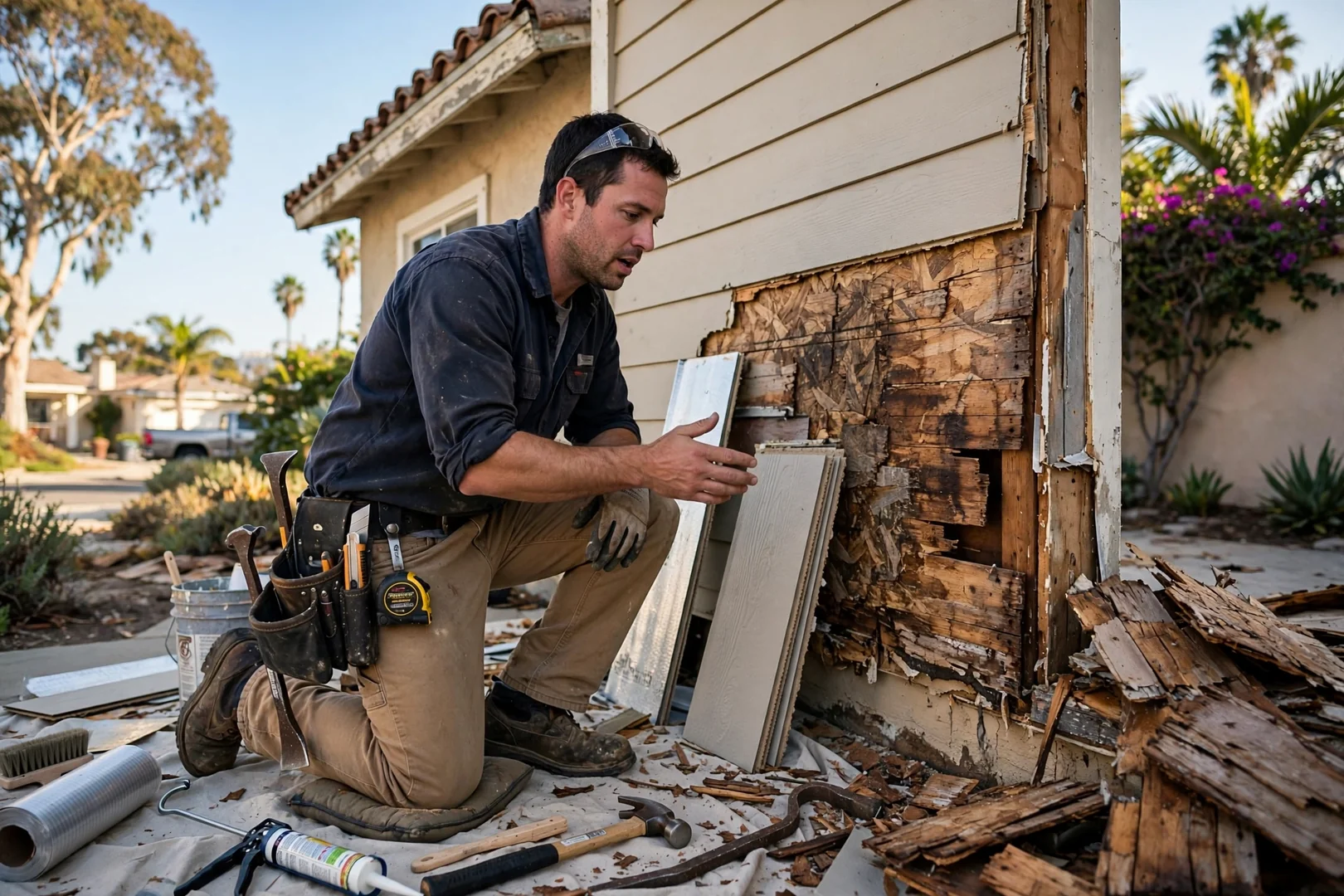
Signs that a Newport Beach property needs James Hardie or fiber cement siding include soft or spongy wall sections, peeling paint that returns within a season, cupped or delaminating planks, and visible gaps at butt joints where caulk has pulled away. Swollen hardboard bottom courses and rusted nail heads bleeding through the finish usually point to trapped moisture behind the cladding rather than a surface problem. On ocean-facing walls, salt crystallization accelerates fastener corrosion and chalking. Interior clues matter too: stained drywall near window corners often traces back to missing kick-out flashing or a failed weather-resistive barrier.
Deferred repairs compound quickly along the coast, where marine humidity keeps substrate lumber damp long after storms pass. Wood-destroying organisms, mildew growth in shaded north elevations, and hairline cracking around penetrations all widen with each seasonal cycle. Through 2026 our evaluations pair moisture meter readings with targeted probe openings to confirm how far decay has spread before pricing any work. Replacement with fiber cement restores a stable, non-combustible, insect-resistant wall system, and every project closes with a documented walkthrough so Newport Beach owners can see the corrected assembly.
// How Our Hardie Work Runs //
How Does Our James Hardie Fiber Cement Siding Process Work?
Findings become a line-item written estimate covering demolition, substrate repair, weather-resistive barrier, fastening method, and finish. Homeowners review profile options such as HardiePlank lap, HardieShingle, and HardiePanel, along with ColorPlus finishes or field-applied paint. Exposure, reveal, and trim details are confirmed before ordering. We also verify permit requirements and HOA color approvals common across Newport Beach neighborhoods.
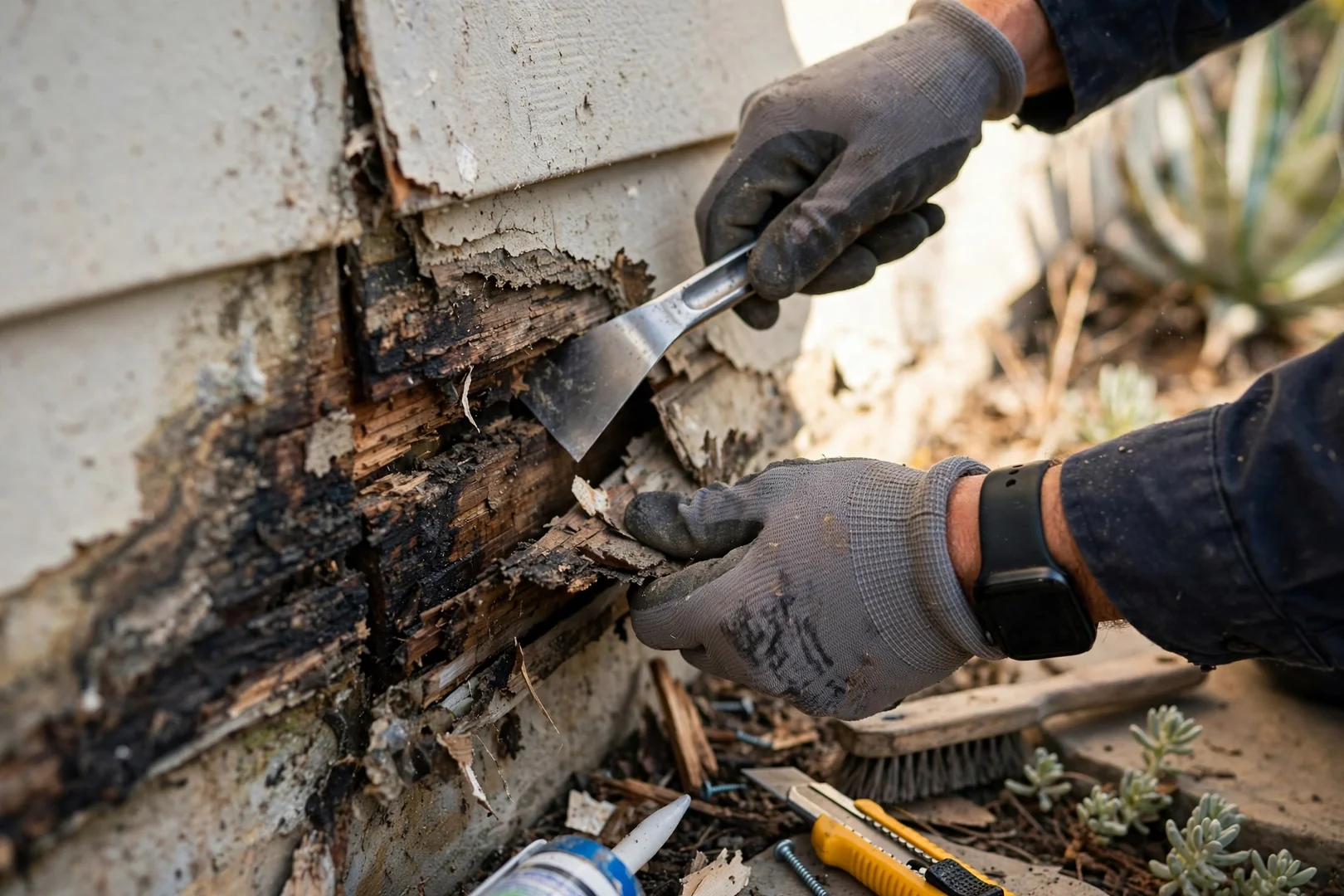
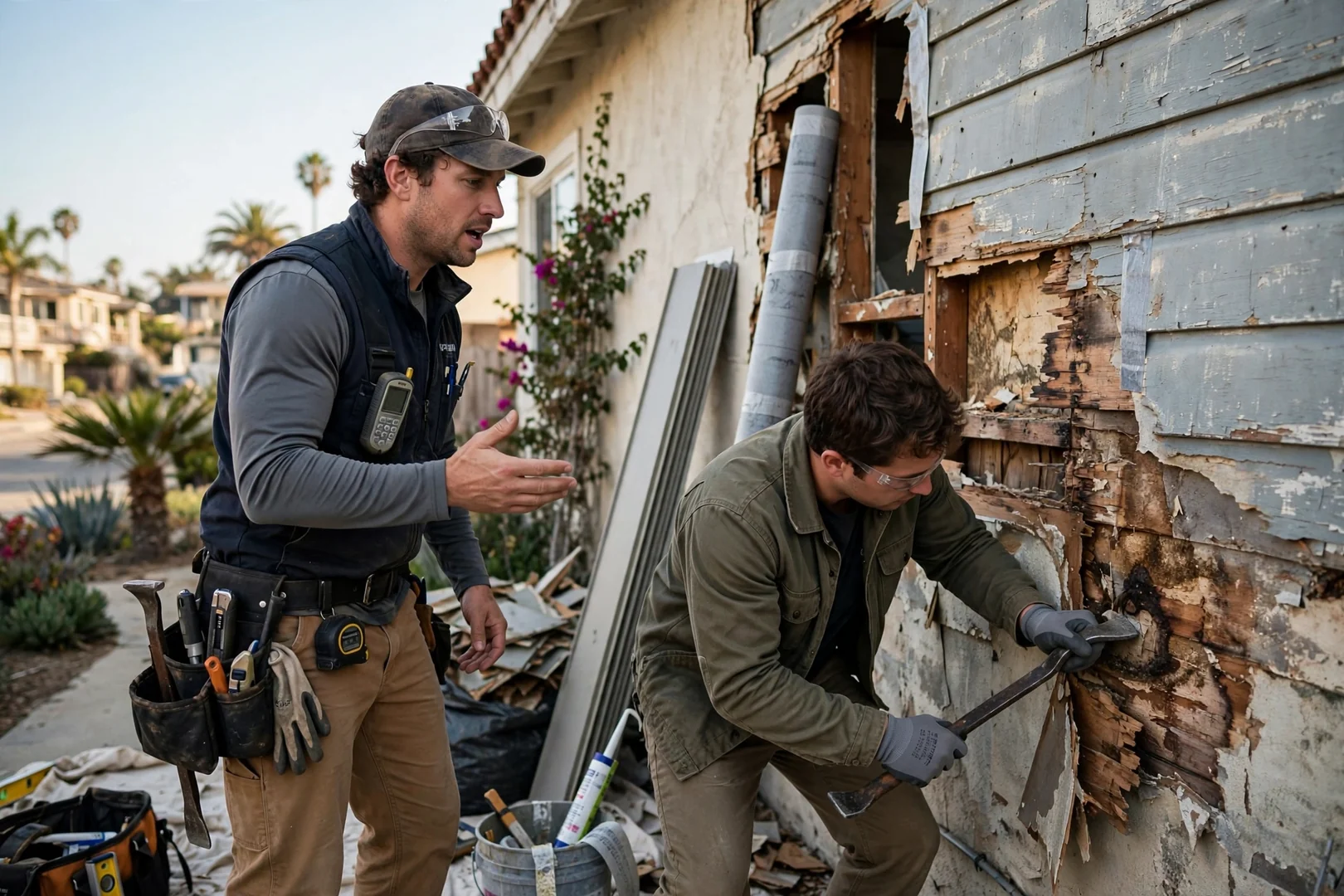
Old cladding is removed in sections rather than stripped all at once, which keeps the structure protected during changing coastal weather. Crews cut power to affected circuits, protect landscaping, and load debris directly for disposal. Rotted sheathing, damaged studs, and corroded flashing are replaced. This corrective stage is where a neglected wall assembly starts recovering real structural health.
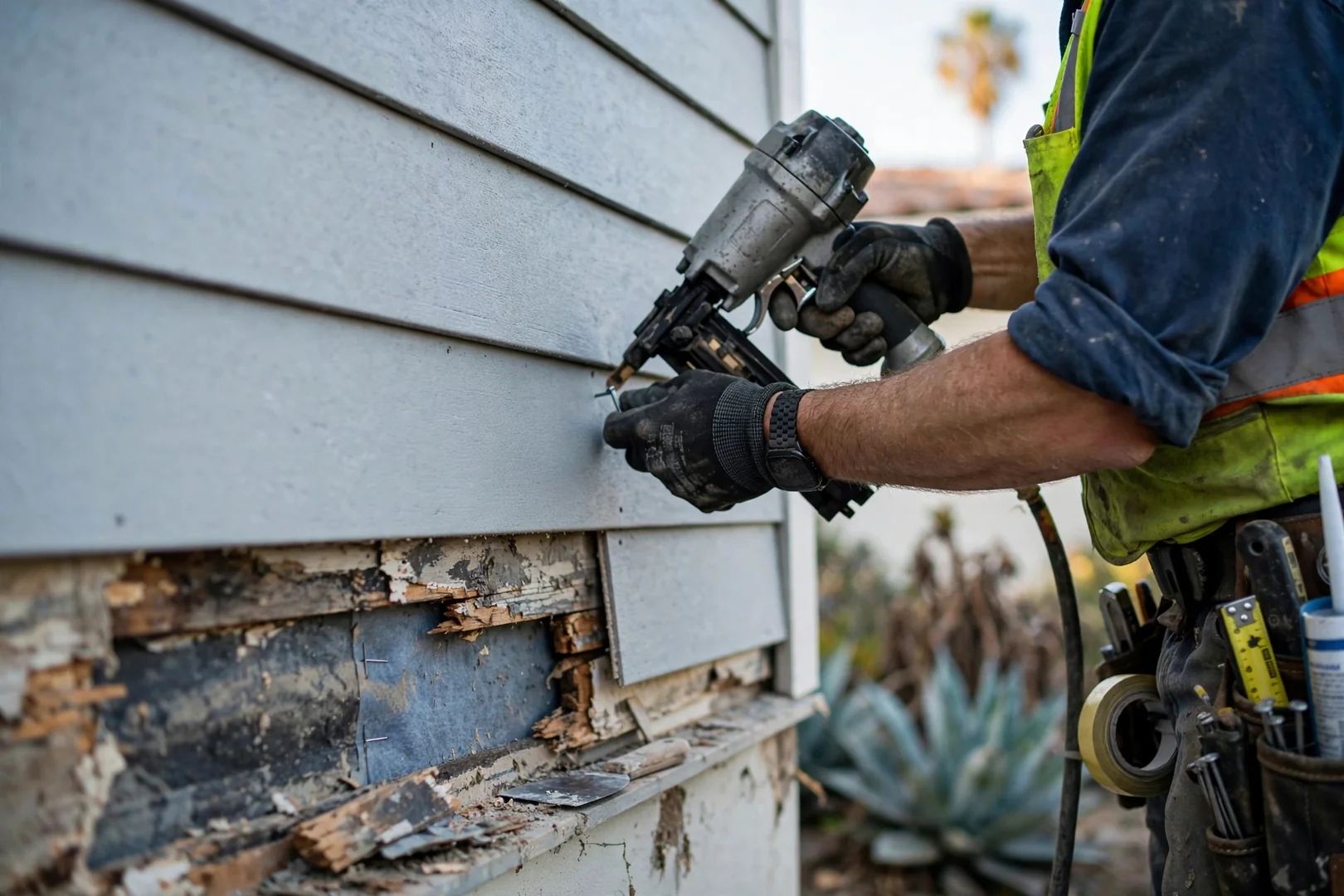
Sheathing is wrapped with a weather-resistive barrier, then flashed at windows, doors, decks, and roof-to-wall transitions with pan flashing and kickout details. Fiber cement boards are cut with dust-controlled shears and fiber cement blades, then blind-nailed at manufacturer-specified spacing with correct joint flashing and clearance above grade and roofing. Butt joints stay tight and staggered. Corrosion-resistant fasteners are standard on oceanfront elevations.
Final sealing uses compatible elastomeric sealant at trim, penetrations, and transitions, while board-to-board joints remain unsealed per installation standards. A punch-list inspection checks reveal consistency, fastener depth, flashing laps, and paint touch-up. Site cleanup includes magnetic sweeps. We close each 2026 project with a post-job walkthrough so the homeowner can verify every restored elevation before sign-off.
- James Hardie Siding Cost Factors in Newport Beach -
How Much Does James Hardie Fiber Cement Siding Cost in Newport Beach?
James Hardie fiber cement siding pricing in Newport Beach depends primarily on total wall square footage, the amount of substrate repair uncovered during removal, the siding profile selected, and access conditions around the structure. Homes needing sheathing replacement, new flashing, or framing repair behind failed cladding carry higher restoration labor than a straightforward panel swap. Profile choice matters too. HardiePlank lap with a narrow reveal requires more courses and fastening passes than wider HardiePanel layouts, and HardieShingle detailing adds cut and alignment time.
Access and elevation complexity shift labor hours significantly. Two- and three-story facades, tight side yards, cantilevered decks, and multi-gable rooflines require staging or scaffolding and slower material handling. Finish method is another variable: factory-applied ColorPlus boards cost more per square than primed board painted on site, though they reduce field labor and touch-up cycles. Disposal of existing stucco, wood, or aged cement board, plus permit fees and any HOA submittal work, also appear as line items on Newport Beach projects.
Exact numbers require an on-site assessment, since moisture readings and probe testing reveal conditions no photo can confirm. Coastal exposure near the harbor often calls for upgraded weather-resistive barriers and corrosion-resistant fasteners, which we price openly rather than bury in a lump sum. Our 2026 estimates break out demolition, substrate restoration, barrier and flashing, installation, and finish separately. Written estimates are provided at no charge, and we review every line with the homeowner before any material is ordered.
Recent James Hardie & Fiber Cement Siding Projects in Newport Beach
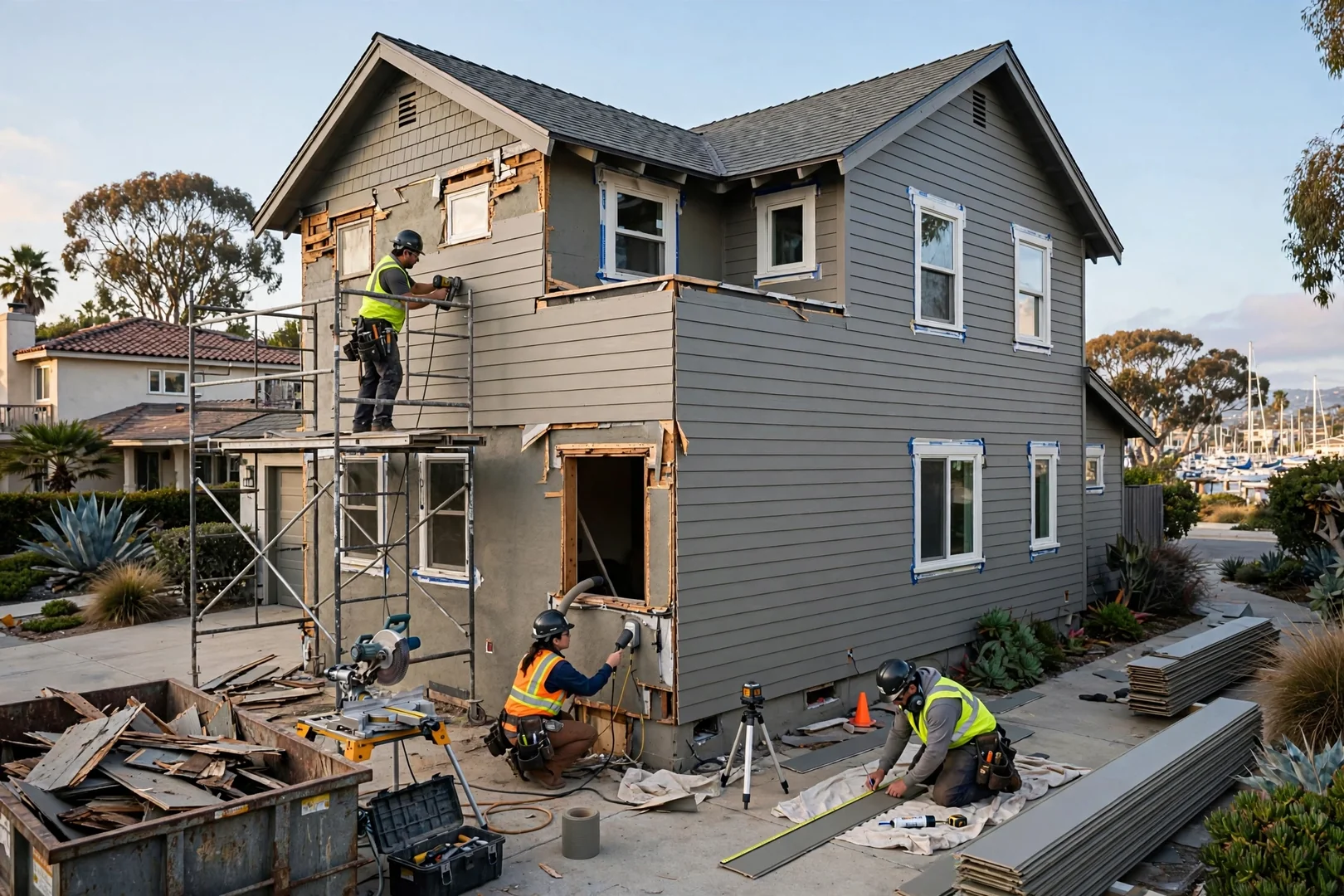
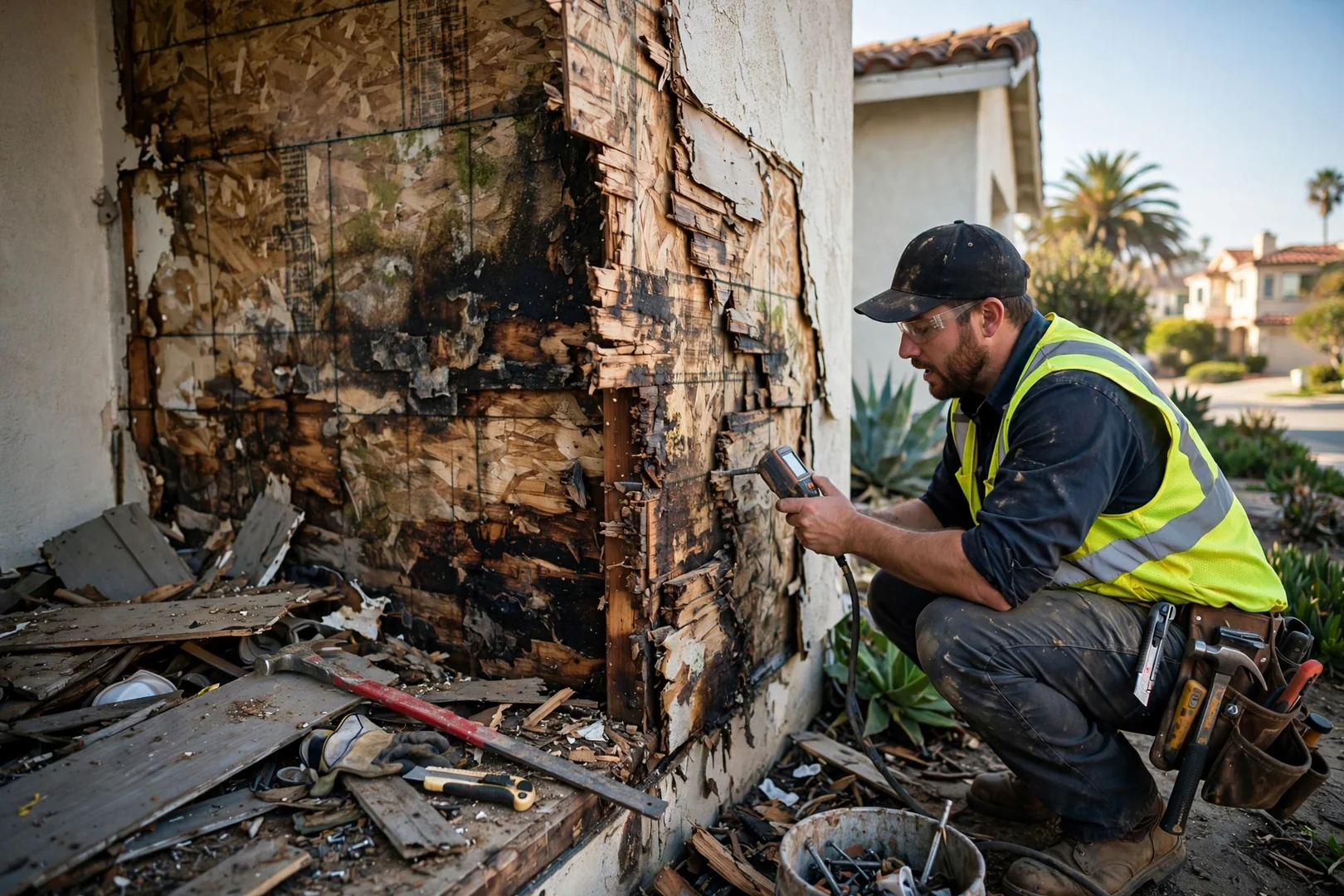
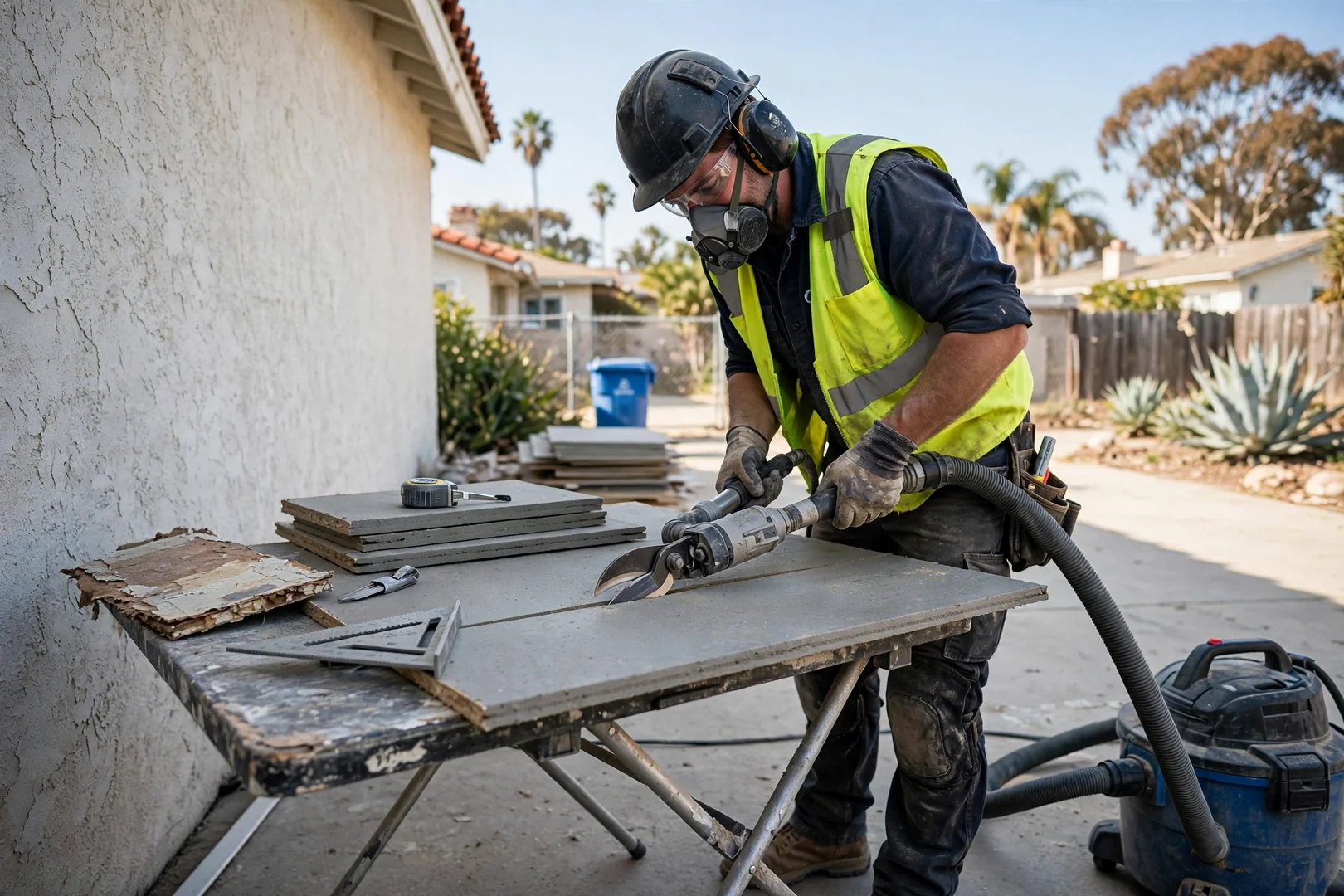
Fiber Cement Siding Questions
James Hardie & Fiber Cement Siding FAQs for Newport Beach Homeowners
Homeowners considering fiber cement replacement usually ask about sequencing, substrate repair, and how coastal exposure affects material selection. The answers below address the questions our estimators field most often during 2026 site evaluations in Newport Beach. Each response reflects the inspection steps, fastening standards, and moisture-management details we follow on restoration projects. Call us if your situation involves conditions not covered here.
Call Us On: (949) 649-3389Plan on scheduling several weeks ahead, since fiber cement projects require a pre-installation moisture inspection, sheathing assessment, and a material order keyed to your chosen HardiePlank profile and ColorPlus finish. Custom colors and trim packages extend lead times more than standard stocked items. We confirm the install window in writing once the material delivery date is locked.
A full installation includes removal and disposal of the existing cladding, inspection and repair of damaged sheathing or framing, installation of weather-resistive barrier and flashing at all penetrations, then blind-nailed fiber cement lap or panel siding with correct joint flashing and clearance gaps. Trim, corner boards, caulking of butt joints, and touch-up of field-cut edges are part of the scope. A post-job walkthrough documents fastener spacing and clearance details before final sign-off.
Clear roughly four to five feet around the perimeter so crews can set scaffolding, cut stations, and dust-collection saws safely away from the wall plane. Move patio furniture, planters, and vehicles, and take down wall-mounted fixtures or décor from interior walls to reduce vibration disturbance during demolition and nailing. Our lead installer reviews access points, water and power availability, and daily cleanup expectations with you before work starts.
Fiber cement pricing reflects heavier material weight, specialized shear and dust-extraction equipment, and the added labor of substrate repair, flashing integration, and precise fastener placement. Wall height, number of stories, trim complexity, condition of existing sheathing, and whether you select pre-finished ColorPlus or field-painted board all shift the figure. We provide an itemized written estimate after the on-site measurement so you can see where each cost sits.
Fiber cement performs well in coastal exposure because the cement, sand, and cellulose composition resists salt-air degradation, UV fading, and moisture swelling that break down wood and some composites. For Newport Beach homes within the salt-spray zone, we specify corrosion-resistant fasteners, maintain proper ground and roof clearances, and pay close attention to flashing at horizontal transitions. Several 2026 restoration projects in Newport Beach began as rot repair behind failing wood siding and finished as fully sealed fiber cement assemblies.
Free Fiber Cement Siding Estimates
Schedule James Hardie Fiber Cement Siding in Newport Beach
Ready to correct failing cladding and restore your home’s weather barrier? Our team begins with an on-site inspection of existing siding, sheathing condition, flashing details, and moisture intrusion points, then documents findings in a free written estimate with no obligation to proceed. Scheduling for 2026 installation slots is moving quickly, so early assessments help secure your preferred project window. Every Newport Beach project includes fastener-pattern verification, manufacturer-specified clearances, and a post-job walkthrough before we consider the work finished. Call or message us today to book your siding evaluation.
Request Your Free Estimate (949) 649-3389